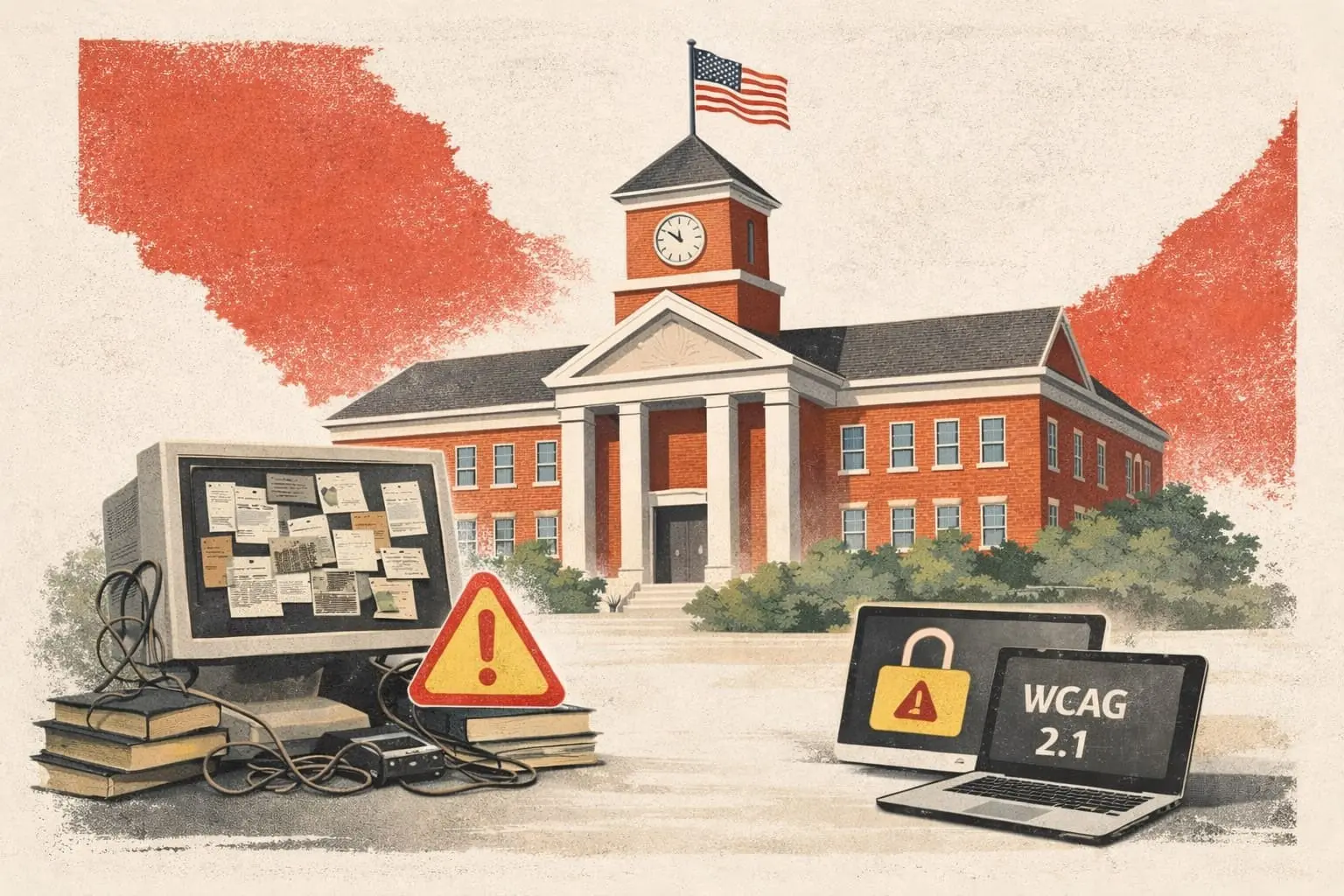
As new ADA Title II accessibility requirements take effect, schools that are not WCAG compliant face real and growing risk. Digital accessibility is no longer limited to district websites or public pages. It now applies to nearly all digital content used for instruction, communication, and school services.
For school leaders, the biggest risk is not just noncompliance itself, but waiting too long to act. This article explains what can happen when a school district is not WCAG compliant and why early preparation is critical.
Legal Consequences for Schools
Failing to meet WCAG 2.1 AA standards can expose districts to multiple legal consequences.
ADA Complaints and DOJ Investigations
Students, parents, staff, or advocacy organizations may file complaints with the Department of Justice alleging inaccessible digital content. These complaints can trigger formal investigations that require districts to respond with documentation, timelines, and remediation plans.
The DOJ’s March 2024 web accessibility rule clearly establishes these obligations: https://www.ada.gov/resources/2024-03-08-web-rule/
Once an investigation begins, districts often lose flexibility over how and when remediation occurs.
Lawsuits and Settlement Agreements
In some cases, districts may face civil lawsuits. Even when lawsuits do not go to trial, settlements frequently require:
- Comprehensive accessibility audits
- Rapid remediation of large volumes of content
- Ongoing monitoring and reporting
- External oversight for multiple years
These agreements often extend far beyond a one-time fix.
Financial Impact of Noncompliance
Accessibility issues rarely remain contained to legal costs alone.
Emergency Remediation Costs
When accessibility problems surface late, districts are often forced to remediate content quickly. Emergency remediation is typically more expensive and may require hiring outside vendors under tight timelines.
Costs can increase significantly when thousands of PDFs, slide decks, or LMS resources need to be fixed at once.
Legal and Administrative Expenses
In addition to remediation, districts may incur:
- Legal fees
- Consultant costs
- Staff overtime
- Administrative time responding to investigations
These expenses are rarely planned for in advance and can disrupt budgets mid-year.
Instructional and Operational Disruption
Accessibility issues can directly affect teaching and learning.
Interrupted Access to Instructional Materials
If instructional content is found to be inaccessible, districts may need to remove or replace materials immediately. This can interrupt lessons, assessments, and student progress, particularly for students who rely on assistive technology.
Increased Pressure on Teachers
When districts respond reactively, accessibility work often shifts to teachers. This can require teachers to:
- Fix documents on short notice
- Rebuild materials during the school year
- Navigate technical requirements without training
This creates frustration and reduces instructional time.
Reputational and Community Impact
Accessibility failures can also affect trust.
Parents and community members may view accessibility issues as a lack of commitment to equity and inclusion. Once public attention is drawn to accessibility failures, rebuilding trust can be difficult.
Why “No One Has Complained” Is Not a Defense
A common misconception is that districts are only at risk after a complaint is filed. In reality, the legal obligation to provide accessible content exists regardless of whether anyone has complained.
Waiting until an issue is raised often means:
- Less time to respond
- Higher remediation costs
- Greater legal exposure
Proactive compliance provides far more control.
How Schools Can Reduce Risk
Districts that successfully reduce accessibility risk tend to follow similar strategies.
Centralize Accessibility Responsibility
Rather than placing responsibility on individual teachers or schools, effective districts centralize accessibility remediation at the district level. This ensures consistency and removes legal decision-making from instructional staff.
Automate Compliance Where Possible
Automation helps districts:
- Identify accessibility issues quickly
- Fix content consistently
- Maintain compliance as new materials are created
This approach scales far better than manual remediation.
Treat Accessibility as Ongoing Infrastructure
Accessibility is not a one-time project. New content is created every day. Districts that view accessibility as ongoing infrastructure are better positioned to stay compliant long-term.
How ClearLinks Can Help
At ClearLinks, we help schools maintain WCAG compliance without adding work for teachers or creating operational strain. Our platform automatically identifies and remediates accessibility issues across district digital content, helping schools reduce legal risk while protecting instructional time.
Accessibility should prevent emergencies, not create them.
Ready to protect your district before issues arise? https://clearlinks.org/contact